
Dryer System Alignment
in Paper Mills and Chemical PlantsIn high-output industrial facilities, rotating equipment rarely fails all at once. It degrades. And one common—often overlooked—contributor to that degradation is dryer system misalignment.
For plant managers overseeing paper mills, chemical processing facilities, or any operation that depends on rotary drying systems, dryer system alignment isn't a one-time commissioning checkbox. It's an ongoing maintenance priority that directly affects uptime, energy consumption, component life, and product quality. The problem is that by the time misalignment becomes obvious, it's usually already expensive.
Why Dryer Alignment Gets Overlooked
Rotary dryers are built to be durable. That durability can work against you from a maintenance standpoint — because the early signs of misalignment are easy to rationalize away. A little extra vibration. Bearing temperatures that are slightly elevated but not alarming. Uneven wear on a tire or trunnion roller that gets noted in an inspection report and scheduled for "next shutdown."
What's actually happening in many of those cases is that the drum has shifted off its proper axis — and every hour it runs that way, it's compounding the damage.
Foundation settling is one of the most common culprits, particularly in facilities built on clay-heavy soils common across Louisiana, Arkansas, and the Gulf Coast region. Thermal expansion during operation, especially in high-temperature chemical drying applications, can also pull a drum out of alignment over time. Major repairs, component replacements, or even a significant process change can introduce misalignment that wasn't present before.
The result is a system that looks like it's running fine — until it isn't.
What Dryer System Misalignment Actually Costs
The financial case for dryer system alignment isn't abstract. Consider what misalignment does to a facility's bottom line:
Accelerated component wear. Misaligned dryers place uneven mechanical stress on tires, trunnion rollers, and bearings. Components that should last years get replaced in months. Each replacement carries not just a parts cost, but a labor cost and a downtime cost.
Energy losses. A drum running out of alignment requires more energy to maintain operating speed. In chemical plants and paper mills where drying sections run continuously, even a modest increase in energy consumption compounds quickly across a production year.
Product quality issues. In paper mill dryer sections, misalignment disrupts felt tracking, causes sheet breaks, wrinkles, and barring. In chemical processing, it can affect the uniformity of the dried product. Neither outcome is acceptable when customers are measuring quality at the receiving dock.
Unplanned downtime. This is the one that gets a plant manager's attention fastest. A bearing failure or a cracked drum shell caused by chronic misalignment doesn't schedule itself around a planned maintenance window. It happens when production is running and the cost per hour of lost output is at its highest.
What Dryer System Alignment Actually Involves
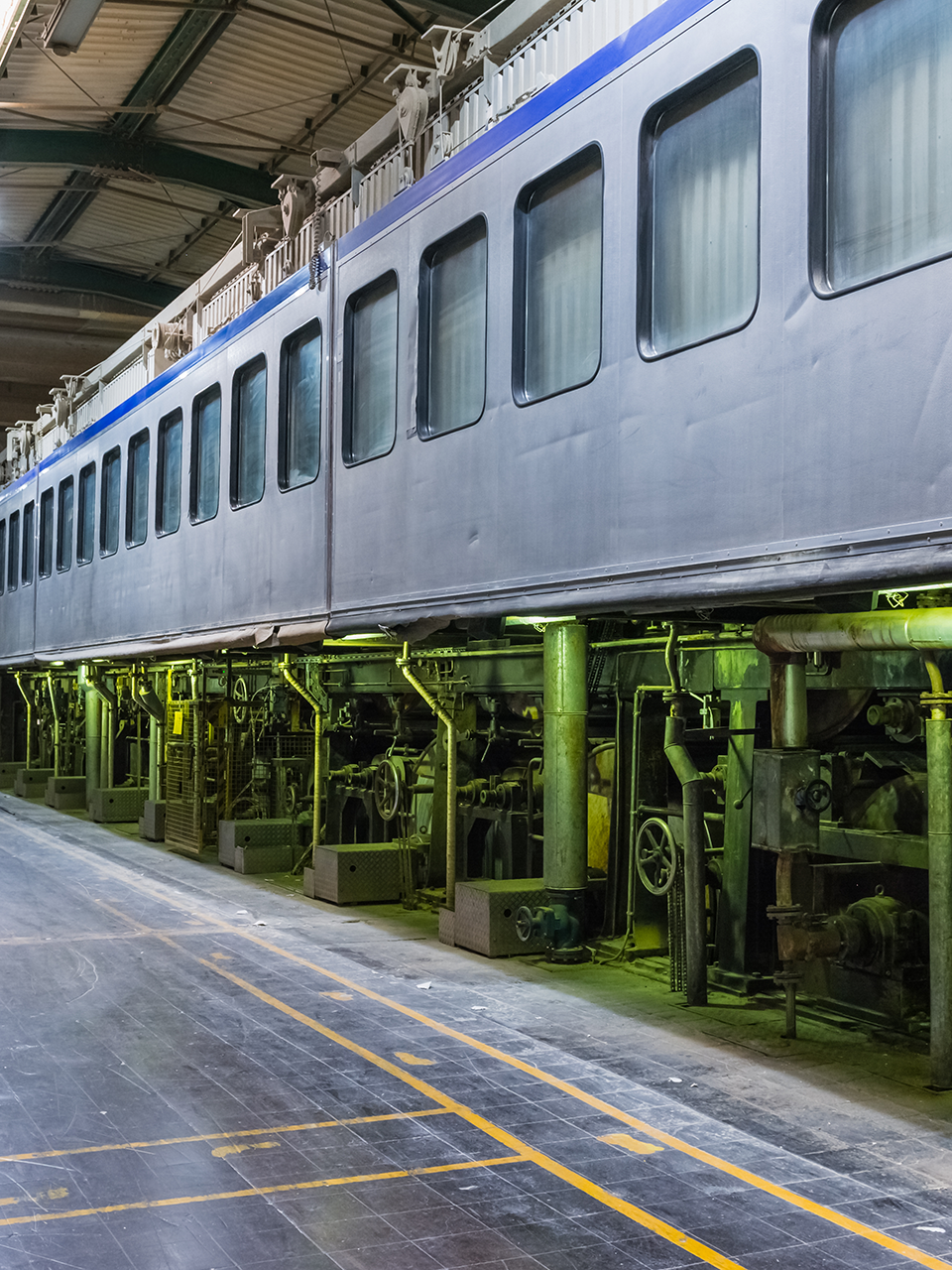
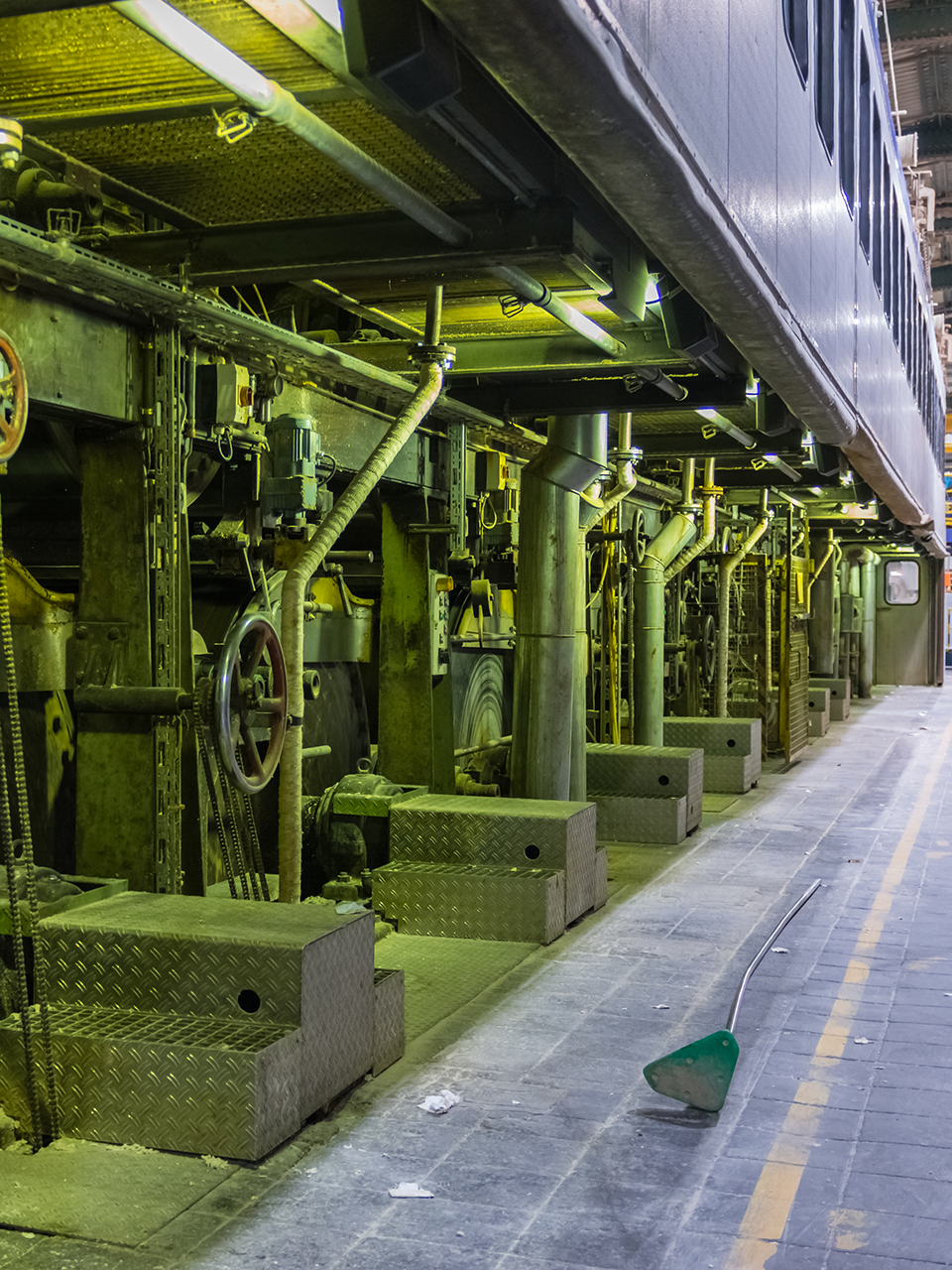
In paper mill applications specifically, dryer system alignment goes well beyond confirming that a single drum is sitting level. The dryer section of a paper machine is a system — dryer cans, frames, and support rolls that must all run true to one another in three dimensions. When any component in that system is off, the effects ripple through the entire section.
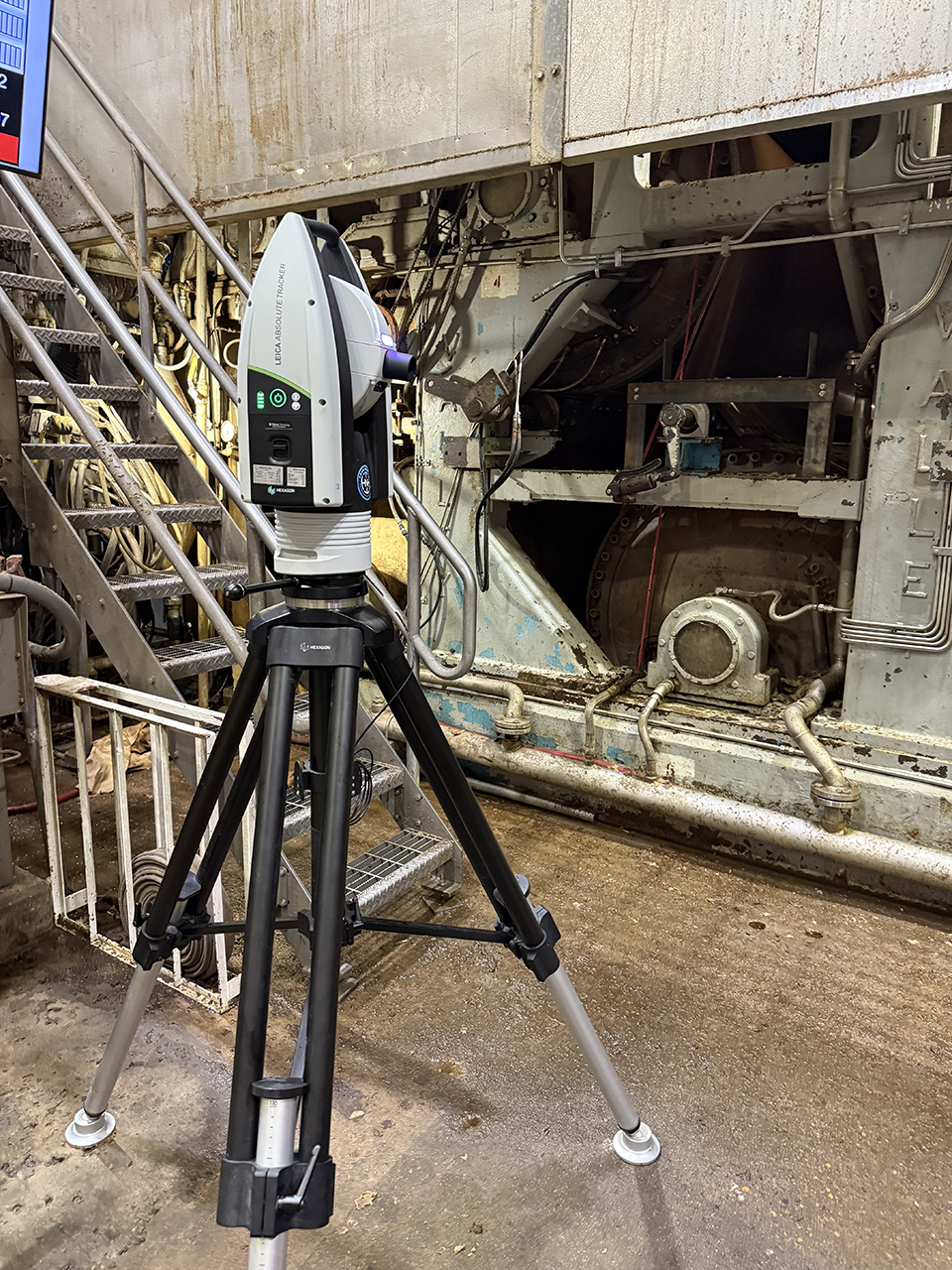
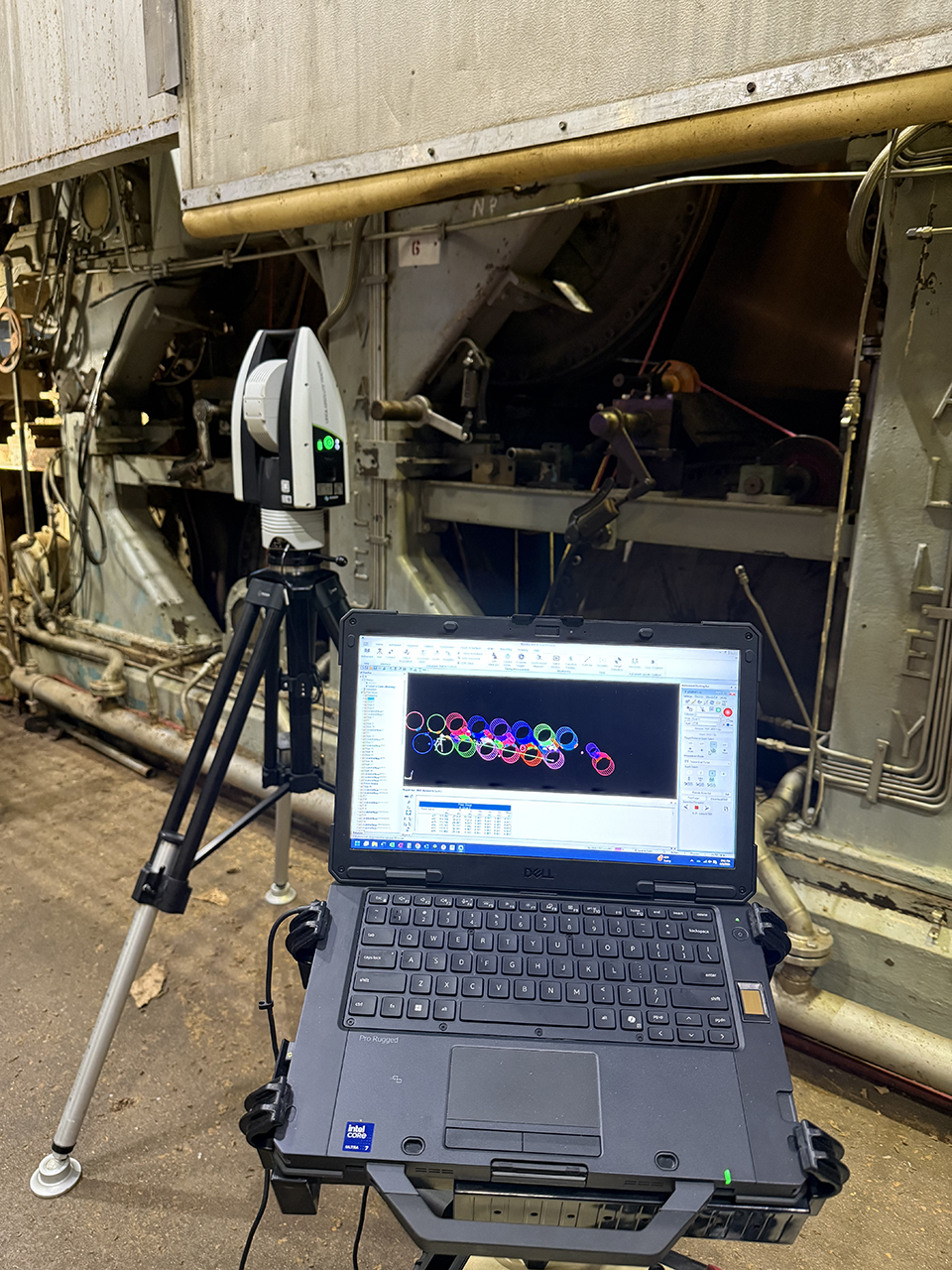
True North uses laser tracker equipment to accurately align dryer cans, frames, and support rolls so that everything runs true in 3D — not just "close enough" with straightedges and strings. Proper dryer section alignment helps cut sheet breaks, wrinkles, and barring, reduces bearing and felt wear, and improves runnability and energy efficiency across the entire dryer section. That's the difference between an alignment that looks acceptable on paper and one that actually performs in production. Learn more about True North's machine alignment services.
We've applied this approach directly in paper mill environments. In a recent project at a central Arkansas paper mill, True North captured high-resolution positional measurements across a dryer section, giving the facility's maintenance and engineering teams a clear picture of machine conditions before their scheduled outage — so they knew exactly which adjustments were necessary and which components could continue running without intervention. Read the full case study here.
The Case for Laser Alignment
Traditional alignment methods — straight edges, piano wire, optical transits — have been used in industrial facilities for decades, and skilled technicians can achieve reasonable results with them. But in complex drying systems, particularly multi-bearing drum configurations common in paper mills, these methods leave margin for error that laser metrology eliminates.
Portable laser trackers and 3D metrology software allow alignment engineers to capture exact position data across the full length of a rotating drum — measuring offset and angular deviation with accuracy down to a thousandth of an inch. That level of precision matters in dryer systems where even small deviations have outsized effects on performance and wear.
True North brings the same laser tracker precision to high-stakes equipment installations as well. In a recent 3D machine alignment project at a new steel mill production line in the Ohio River Valley, our field team used real-time positional data to verify that every major component was set exactly to design coordinates before grouting began — preventing costly rework before a single production run.
Just as importantly, laser alignment generates documented before-and-after data. For plant managers who need to justify maintenance investments to operations leadership, or for facilities operating under regulatory compliance requirements, that documentation has real value beyond the alignment itself.
When to Schedule a Dryer System Alignment
A good rule of thumb for most industrial rotary dryer systems is a professional alignment inspection at least annually, built into planned maintenance shutdowns. But certain conditions warrant moving sooner:
- Unexplained increases in bearing temperature or vibration readings
- Visible uneven wear on tires or trunnion rollers
- Sheet breaks, wrinkles, or barring in the dryer section
- Product quality issues that don't trace back to process changes
- Any major repair, component replacement, or significant process modification
- Foundation work or significant ground movement near the facility
If any of these conditions are present, waiting for the next scheduled shutdown may not be the right call.
True North's Approach to Dryer System Alignment
At True North Metrology & Alignment, our field teams work directly on plant floors across the Gulf Coast and Southeast, bringing portable laser tracker technology and 3D metrology software to machine alignment work that other methods can't measure accurately enough. We provide detailed before-and-after alignment reports with every job — documentation that plant managers and maintenance teams can actually use.
If your facility operates rotary dryers and dryer system alignment hasn't been part of a recent maintenance review, it's worth a conversation. The cost of an alignment is predictable. The cost of what happens without one usually isn't.
Schedule a Dryer System Alignment
When precision matters, waiting costs more than just time —
it costs performance, reliability, and revenue.
Contact True North Metrology & Alignment to schedule an on-site consultation.
True North Metrology & Alignment provides precision machine alignment, 3D laser scanning, and metrology services to industrial facilities across the Gulf Coast and Southeast United States. Learn more about our machine alignment services.
Related Articles
Motion Amplification for Paper Mill
3D Machine Alignment for Steel Mill